

Preserving AgingInfrastructure
Corrosion Integrity is a design-build corrosion engineering firm. We survey, design and install the cathodic protection that keeps pipelines, storage tanks and concrete infrastructure in service — and we run the non-destructive testing that proves it is fit for service.
Fig. 2 — Storage tanks
Same principle, inside the tank.
On a water storage tank the electrolyte is the water itself. Titanium wire anodes hang from the roof on insulated suspension leads, current spreads through the column onto the shell and floor, and a permanent reference cell reports what the steel is actually seeing — without draining the tank to find out.
Fit for service
An asset is either fit for service, or it is on a clock. We tell you which.
Corrosion Integrity evaluates infrastructure to determine whether the asset is fit for service, what its remaining useful life is, and whether it can continue to operate safely. Every answer comes from measurement — soil resistivity, structure-to-soil potential, wall thickness, coating adhesion — not from inspection by eye.
Sectors served
Capabilities
Engineer it, assess it, build it — under one point of contact.
Design-build means the engineer who specifies the system is accountable for the crew that installs it. One contact owns the schedule, the budget and the deliverables.
Engineering services
Soil resistivity surveys, laboratory corrosivity analysis, cathodic protection and monitoring system design, plans and specifications.
- Cathodic protection design — galvanic and impressed current
- Above-grade storage tanks and clarifiers
- Atmospheric corrosion assessment
- Reinforced concrete corrosion control
- Coatings and paints consulting and inspection
- Internal corrosion — coupons, LPR and ER probes
- Interference and stray current studies
- Corrosion failure analysis
- Material selection for corrosive environments
Condition assessment
A comprehensive engineering report on the reliability of your facility, built from direct inspection, indirect monitoring and NDT — customizable to your expectations.
- Assessments that follow or exceed ASTM standards
- Remaining useful life (RUL) of each asset
- Repair-or-replace recommendations, prioritized
- Facility Condition Index (FCI) benchmark
- Renewal and replacement cost estimates
- Strategic repair, replacement and modernization plan
- Preventive maintenance and capital planning
- Referenced to ACI, ASTM, API, ISO and AMPP (NACE)
Construction & project management
Multimillion-dollar design-build delivery across nuclear, oil & gas, municipal and private sector work. Turn-key, with a site visit before the estimate.
- Anode ground beds — distributed and deep well
- Storage tank cathodic protection installation
- Integrity digs and pipeline excavation
- Rectifier, RMU and test station installation
- Hydrovac and key holing services
- AC mitigation and grounding wells
- Submersible anode sled installation
- Tank wash-down, cleaning and disinfection
Inspection & NDT
Twelve ways to find metal loss before it finds you.
Our engineers and technicians run these methods in-house, each assigned to a project by forensic specialty. Select a method for what it detects and where we apply it.
Ultrasonic thickness
It is estimated that more than $30 billion in corrosion damage occurs in water and wastewater handling systems every year.
Pipelines, storage tanks and treatment plants carry most of it. Cathodic protection, correctly designed and actually monitored, is the cheapest line item on the ledger — and the one most often skipped.
Talk through your assetThe criterion
Minus 850 millivolts is the line.
Cathodic protection is judged against a number, not an opinion. Drag the potential and watch where the steel sits.
- Reference
- Cu / CuSO4 (CSE)
- Criterion
- −850 mV, IR-free
- Measured
- Instant-off or coupon
Illustrative only — a real assessment needs an IR-free potential and wall thickness data.
 Splice kits & sealing
Scotchcast Resin 4N — Size C
Two-part epoxy insulating and encapsulating resin in a closed mixing pouch. Seals cable splices to 8 kV and generates its own cure heat.
Splice kits & sealingScotchcast Resin 4N — Size D
Two-part epoxy insulating and encapsulating resin in a closed mixing pouch. Seals cable splices to 8 kV and generates its own cure heat.
Splice kits & sealingScotchcast Resin 4N — Size D-NZ
Two-part epoxy insulating and encapsulating resin in a closed mixing pouch. Seals cable splices to 8 kV and generates its own cure heat.
Splice kits & sealing3M 82-A1 Splice Kit
Inline splice kit for unshielded, synthetic-insulated cable. UL Listed for direct burial and submerged use to 600 V and 90 °C.
Splice kits & sealingScotchcast Resin 4N — Size E
Two-part epoxy insulating and encapsulating resin in a closed mixing pouch. Seals cable splices to 8 kV and generates its own cure heat.
Splice kits & sealing3M 82-A2 Splice Kit
Inline splice kit for mid-range conductors. UL Listed for direct burial and submerged use to 600 V and 90 °C.
Splice kits & sealing3M 82-A3 Splice Kit
Inline splice kit for large conductors. UL Listed for direct burial and submerged use to 600 V and 90 °C.
Splice kits & sealing3M 82-B1 Splice Kit
Tap and branch splice kit for weather-exposed and direct-burial joints, to 5 kV with a solder sleeve or compression connector.
Splice kits & sealingScotchcast Resin 4N — Size A
Two-part epoxy insulating and encapsulating resin in a closed mixing pouch. Seals cable splices to 8 kV and generates its own cure heat.
Splice kits & sealingScotchcast Resin 4N — Size B
Two-part epoxy insulating and encapsulating resin in a closed mixing pouch. Seals cable splices to 8 kV and generates its own cure heat.
 Power & control
Off-Grid PV Pole
Pole-mounted array, enclosure and storage — a complete power package for remote cathodic protection sites.
 Tank hardware
Clevis Assembly
Anode suspension hardware for tank installations — takes the mechanical load off the anode lead.
 Tank hardware
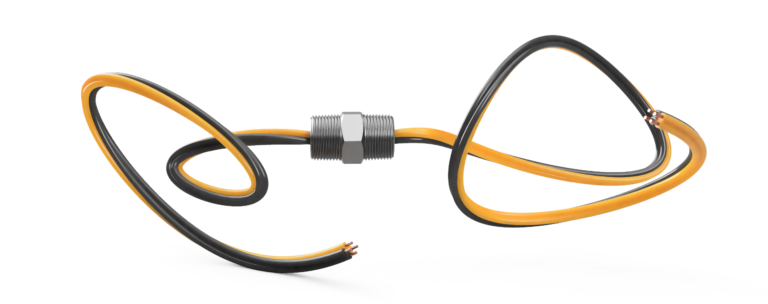
1" NPT Pressure Fitting
Male threaded nipple for pressurised penetrations where the cable has to pass through the shell.
 Tank hardware
Hand Hole Cover Assembly
Access cover with sealed cable entries for tank shells — keeps the penetration serviceable.
 Tank hardware
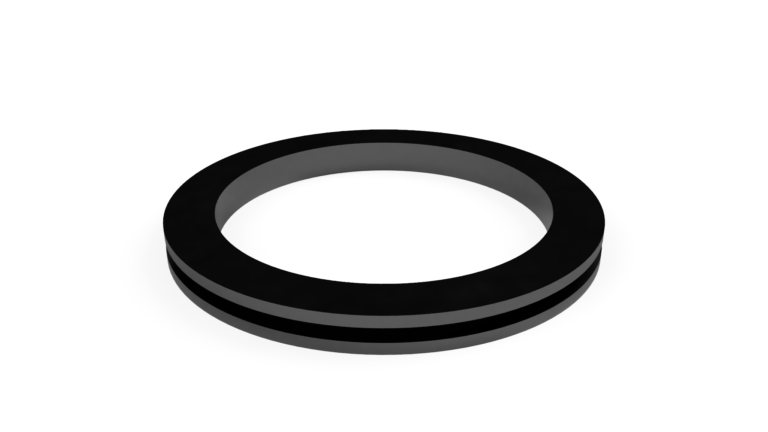
Grommet
Sealed cable penetration for tank roofs and hand holes.
 Test stations
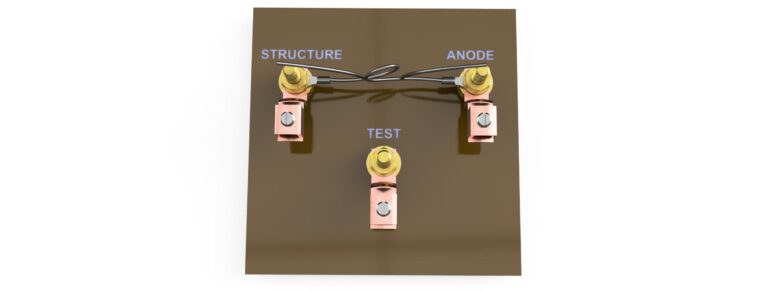
Phenolic Test Board
Anode current testing and shunt terminations — the point where the system gets measured.
 Test stations
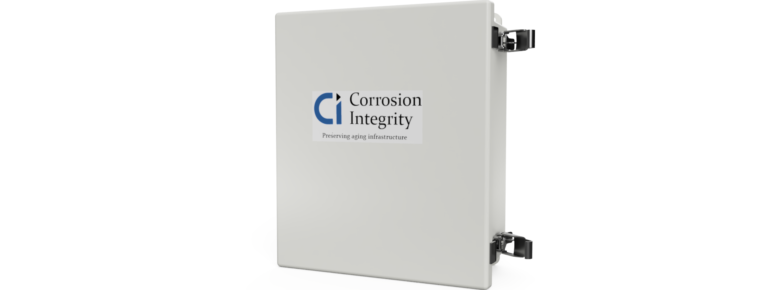
Sacrificial Test Station
Flush or above-grade station for potential and current testing, opening for access to the terminations.
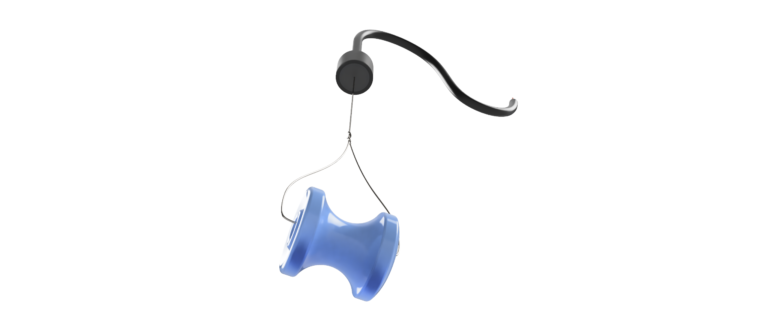 Anodes
Titanium MMO Anode
Mixed metal oxide on titanium. The workhorse impressed-current anode for potable water and wastewater storage tanks.
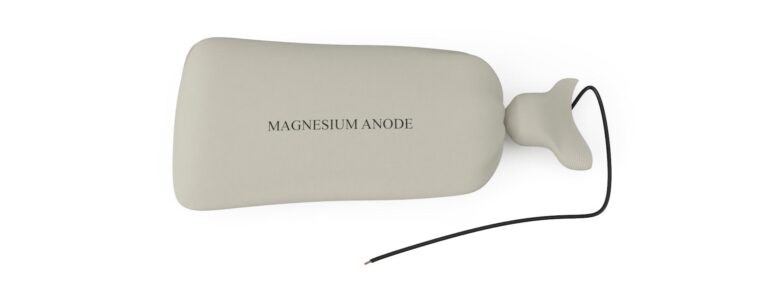 Anodes
Sacrificial Mag Anode Bag
Magnesium anode pre-packaged in backfill for direct burial — no external power, sized to the structure and soil resistivity.
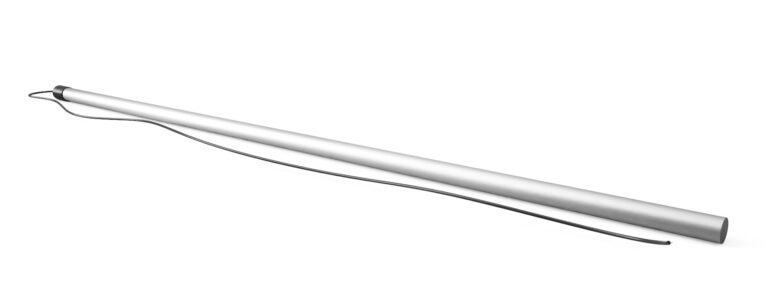 Anodes
Mag Rod Anode
Magnesium rod for galvanic systems — tank interiors, small structures and retrofit protection.
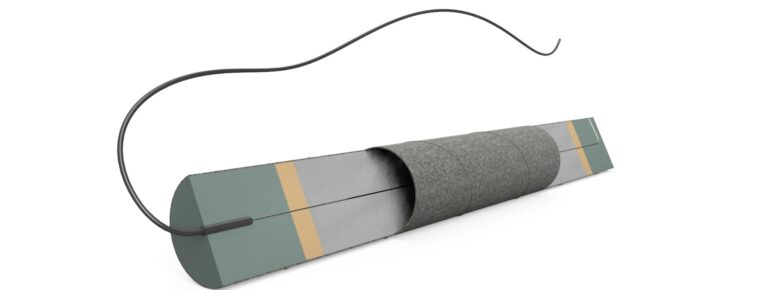 Anodes
Canistered Wire Anode
Canistered wire anode for deep well and distributed ground beds where soil conditions demand depth.
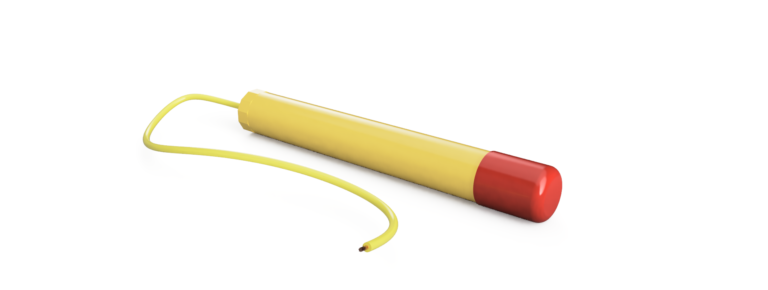 Reference cells
Reference Cell — Tanks
Permanent cell for structure-to-electrolyte potential monitoring inside storage tanks and clarifiers.
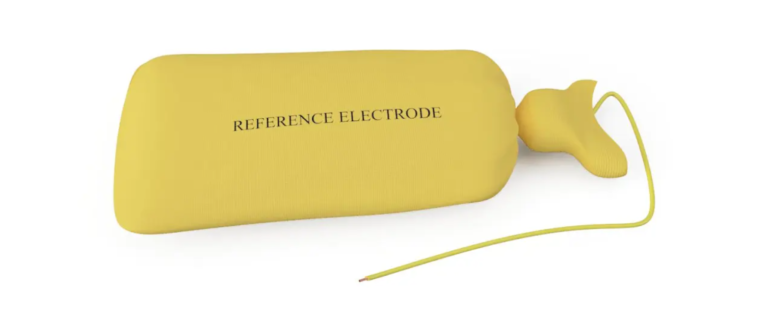 Reference cells
Reference Electrode — Underground
Buried permanent electrode for pipeline potential monitoring and remote monitoring unit inputs.
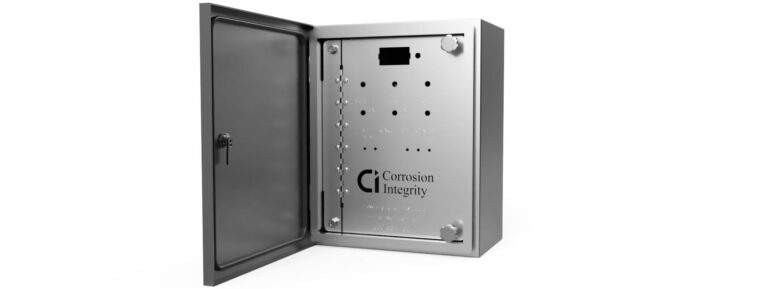 Power & control
PV DC Current Controller
Solar-driven current control for impressed current systems where grid power is not available.
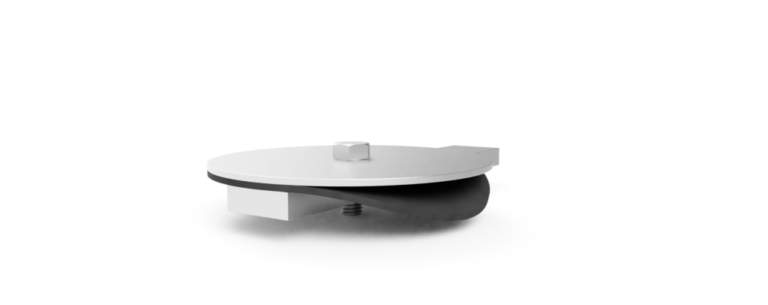 Uncategorized
8" Hand Hole Cover Assembly
316 stainless steel access cover in the larger shell size, for multiple cable entries or where the smaller cover will not clear the terminations.
 Uncategorized
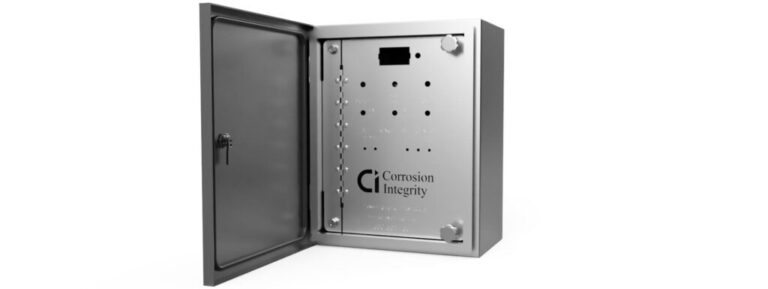
IR-Free Rectifier — 30 V 8 A
Potential-controlled IR-free rectifier with alarm lights in a brushed aluminium enclosure. Priced as a full rectifier replacement, installed.
 Uncategorized
TASC / IRT Controller Card
Replacement controller card for TASC and IR-free rectifier units. Material price; installation is charged at the crew day rate.
Uncategorized9 lb Magnesium Anode
Standard-potential magnesium anode with 10 ft of No. 12 TW solid black lead, for buried pipe, casings and small structures. Anode weight drives current output and life — size it to the soil resistivity and the coated area you are protecting.
Uncategorized17 lb Magnesium Anode
Standard-potential magnesium anode with 10 ft of No. 12 TW solid black lead, for buried pipe, casings and small structures. Anode weight drives current output and life — size it to the soil resistivity and the coated area you are protecting.
Uncategorized20 lb Magnesium Anode
Standard-potential magnesium anode with 10 ft of No. 12 TW solid black lead, for buried pipe, casings and small structures. Anode weight drives current output and life — size it to the soil resistivity and the coated area you are protecting.
Uncategorized32 lb Magnesium Anode
Standard-potential magnesium anode with 10 ft of No. 12 TW solid black lead, for buried pipe, casings and small structures. Anode weight drives current output and life — size it to the soil resistivity and the coated area you are protecting.
Uncategorized48 lb Magnesium Anode
Standard-potential magnesium anode with 10 ft of No. 12 TW solid black lead, for buried pipe, casings and small structures. Anode weight drives current output and life — size it to the soil resistivity and the coated area you are protecting.
Uncategorized60 lb Magnesium Anode
Standard-potential magnesium anode with 10 ft of No. 12 TW solid black lead, for buried pipe, casings and small structures. Anode weight drives current output and life — size it to the soil resistivity and the coated area you are protecting.
UncategorizedNo. 10 HMWPE Cable
High molecular weight polyethylene insulated copper, cut to length. The jacket is the reason this and not building wire: chlorine and hydroxyl generated at an anode will work through a softer insulation and take the copper with it. Halar and Kynar jackets are available to order for higher-temperature and chemically aggressive service.
UncategorizedNo. 8 HMWPE Cable
High molecular weight polyethylene insulated copper, cut to length. The jacket is the reason this and not building wire: chlorine and hydroxyl generated at an anode will work through a softer insulation and take the copper with it. Halar and Kynar jackets are available to order for higher-temperature and chemically aggressive service.
UncategorizedNo. 6 HMWPE Cable
High molecular weight polyethylene insulated copper, cut to length. The jacket is the reason this and not building wire: chlorine and hydroxyl generated at an anode will work through a softer insulation and take the copper with it. Halar and Kynar jackets are available to order for higher-temperature and chemically aggressive service.
UncategorizedNo. 4 HMWPE Cable
High molecular weight polyethylene insulated copper, cut to length. The jacket is the reason this and not building wire: chlorine and hydroxyl generated at an anode will work through a softer insulation and take the copper with it. Halar and Kynar jackets are available to order for higher-temperature and chemically aggressive service.
UncategorizedNo. 2 HMWPE Cable
High molecular weight polyethylene insulated copper, cut to length. The jacket is the reason this and not building wire: chlorine and hydroxyl generated at an anode will work through a softer insulation and take the copper with it. Halar and Kynar jackets are available to order for higher-temperature and chemically aggressive service.
UncategorizedNo. 1 HMWPE Cable
High molecular weight polyethylene insulated copper, cut to length. The jacket is the reason this and not building wire: chlorine and hydroxyl generated at an anode will work through a softer insulation and take the copper with it. Halar and Kynar jackets are available to order for higher-temperature and chemically aggressive service.
UncategorizedNo. 1/0 HMWPE Cable
High molecular weight polyethylene insulated copper, cut to length. The jacket is the reason this and not building wire: chlorine and hydroxyl generated at an anode will work through a softer insulation and take the copper with it. Halar and Kynar jackets are available to order for higher-temperature and chemically aggressive service.
UncategorizedNo. 2/0 HMWPE Cable
High molecular weight polyethylene insulated copper, cut to length. The jacket is the reason this and not building wire: chlorine and hydroxyl generated at an anode will work through a softer insulation and take the copper with it. Halar and Kynar jackets are available to order for higher-temperature and chemically aggressive service.
UncategorizedNo. 4/0 HMWPE Cable
High molecular weight polyethylene insulated copper, cut to length. The jacket is the reason this and not building wire: chlorine and hydroxyl generated at an anode will work through a softer insulation and take the copper with it. Halar and Kynar jackets are available to order for higher-temperature and chemically aggressive service.
Uncategorized5-Terminal Test Station Head
Five-terminal head for potential and current measurement points, taking the leads from the pipe, the anode and the shunt onto separate terminals so a reading is repeatable.
UncategorizedTest Station Head with Pipe
The same head supplied on its post, for a new above-grade station where there is nothing already in the ground to mount to.
UncategorizedG5C Flush-Mount Box
Traffic-rated flush box for a station in a roadway, a shoulder or anywhere a post would be hit. The box goes in at grade and the terminal board mounts inside it.
UncategorizedG5CT Lid
Replacement lid for the G5C box — the part that actually gets destroyed, by a grader blade or a snow plough, long before the box does.
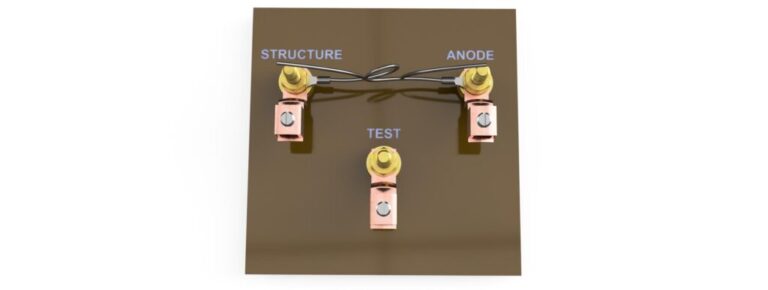
Uncategorized5" × 5" Terminal Board
Phenolic terminal board for a flush box, drilled for shunts and terminal posts so that current can be read without breaking a connection.
UncategorizedNo. 2 Bond Jumper — 18"
Pre-cut bonding jumper for joints, valves, casings and mechanical couplings — electrical continuity across a fitting that would otherwise leave a length of main unprotected. Unsleeved, for dry and accessible joints.
UncategorizedNo. 2 Bond Jumper — 24"
Pre-cut bonding jumper for joints, valves, casings and mechanical couplings — electrical continuity across a fitting that would otherwise leave a length of main unprotected. Unsleeved, for dry and accessible joints.
UncategorizedNo. 2 Bond Jumper — 18" Sleeved
Pre-cut bonding jumper for joints, valves, casings and mechanical couplings — electrical continuity across a fitting that would otherwise leave a length of main unprotected. Sleeved where it crosses the joint, so the bond cannot ground out against the fitting it spans.
UncategorizedNo. 2 Bond Jumper — 24" Sleeved
Pre-cut bonding jumper for joints, valves, casings and mechanical couplings — electrical continuity across a fitting that would otherwise leave a length of main unprotected. Sleeved where it crosses the joint, so the bond cannot ground out against the fitting it spans.
UncategorizedNo. 4 Bond Jumper — 18"
Pre-cut bonding jumper for joints, valves, casings and mechanical couplings — electrical continuity across a fitting that would otherwise leave a length of main unprotected. Unsleeved, for dry and accessible joints.
UncategorizedNo. 4 Bond Jumper — 24"
Pre-cut bonding jumper for joints, valves, casings and mechanical couplings — electrical continuity across a fitting that would otherwise leave a length of main unprotected. Unsleeved, for dry and accessible joints.
UncategorizedNo. 4 Bond Jumper — 18" Sleeved
Pre-cut bonding jumper for joints, valves, casings and mechanical couplings — electrical continuity across a fitting that would otherwise leave a length of main unprotected. Sleeved where it crosses the joint, so the bond cannot ground out against the fitting it spans.
UncategorizedNo. 4 Bond Jumper — 24" Sleeved
Pre-cut bonding jumper for joints, valves, casings and mechanical couplings — electrical continuity across a fitting that would otherwise leave a length of main unprotected. Sleeved where it crosses the joint, so the bond cannot ground out against the fitting it spans.
UncategorizedCAA Cadweld Mold with Frame
Horizontal graphite mold and handle frame for cadwelding a lead to the pipe wall. One mold is good for a run of welds before the graphite erodes past a clean joint.
UncategorizedFlint Striker
Flint igniter for cadweld charges.
UncategorizedRoyston Handy Cap
Mastic cap over the finished weld, keeping water off the bare steel and the connection. Priced singly; a box is $120.80.
UncategorizedCadweld Charges
Welding charges by the package, sized to the mold and the conductor. Tell us the mold and the lead you are welding and we will price the right package.
Uncategorized3M 90-B1 Splice Kit
Branch and tap splice kit for direct-burial and submerged joints — the kit for taking an anode lead onto a header cable without leaving a path to water.
UncategorizedScotch 130C Linerless Rubber Tape
Self-fusing ethylene propylene rubber tape. Stretched and wrapped it fuses into one mass with no seam for water to track along, which is what makes it a splice tape rather than an insulating one.
UncategorizedScotch Super 33+ Vinyl Tape
Vinyl electrical tape as the outer jacket over a fused rubber splice — abrasion and UV protection, not the seal itself.
UncategorizedScotch Super 88 Vinyl Tape
Heavier vinyl tape for the same job where the splice will be pulled through soil or rock and the thinner jacket would abrade through.
UncategorizedScotchkote Electrical Coating
Brush-on sealer over a finished splice or a cadweld cap, sealing the tape edges where water would otherwise start working in.
UncategorizedC-Crimps and Split Bolts
Compression C-crimps and split-bolt connectors, sized to the conductors being joined. Tell us the two gauges and we will price the connector.
UncategorizedPin Brazing — Materials and Installation
Pin brazed lead attachment where a cadweld is not permitted — thin wall, high pressure, or an operator who will not allow an exothermic weld on a live line. Quoted with the materials and the technician together.
Safety & training
Our foundation is safety. Our people are certified to prove it.
We invest in employee development and in the reporting culture that keeps hazards visible before they become incidents.
Built on dedication to safety
Corrosion Integrity's success and foundation is built on our dedication to safety. Crews carry current certifications, and every project runs safety observation reporting and hazard identification.
Classes & certifications
API RP 578 — Material Verification Program
API 578 gives guidelines for a Material Verification Program (MVP) to confirm the correct chemical composition of alloy materials in new and existing process piping systems across oil, gas and petrochemical service.
- Purpose — establish a quality assurance system for material verification, preventing wrong material installation that leads to accelerated corrosion or component failure.
- Scope — ferrous and nonferrous alloy materials in new and existing process piping systems and equipment.
Coverage
Headquartered in Sacramento. Mobilized across the West.
Two offices, four licensed states, and crews that mobilize to the asset rather than waiting for it to come to them.
Northern California office
Pleasant Grove, CA3837 Howsley RdPleasant Grove, CA 95668
Northern Arizona office
Flagstaff, AZFlagstaff, AZ 86001Licensed operations
Additional operations in the Midwest and Southwest.
Licenses & registrations
- CSLB #1057714 — Engineering A, C57
- AZ ROC #337772
- NV #0095161
- DIR #PW-LR-1000421416
- MBE & WBE #22000141
- SBE #2025728
Service request
Tell us what you are protecting.
We visit the site before we estimate. Send the structure, the environment and what you already know — an engineer will come back to you, not a call center.
Northern California
3837 Howsley RdPleasant Grove, CA 95668
Northern Arizona
Flagstaff, AZ 86001